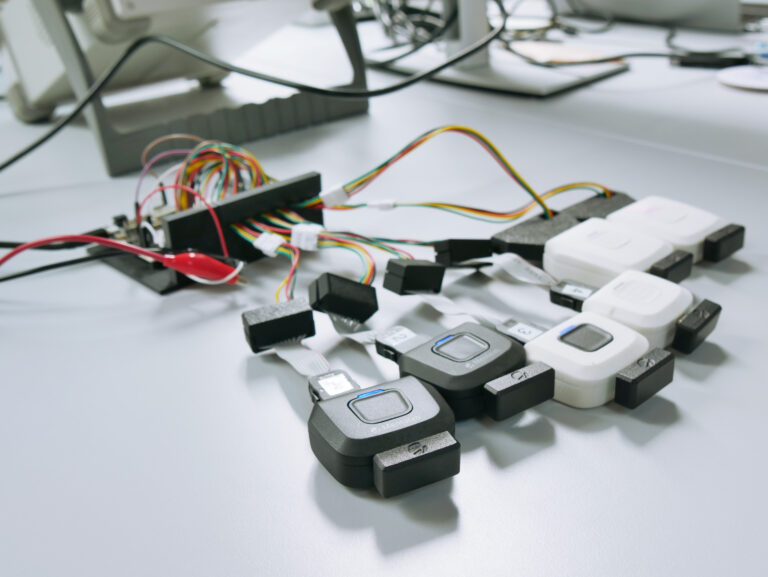
Inside Mentalab Hypersync: How We Test Our Hyperscanning Technology
From predicting frustration to adaptive interfaces, EEG is redefining UX research. Here’s why it matters now.

From predicting frustration to adaptive interfaces, EEG is redefining UX research. Here’s why it matters now.

From predicting frustration to adaptive interfaces, EEG is redefining UX research. Here’s why it matters now.

Explore how ExG biosignals (EEG, ECG, EMG) are transforming automotive R&D for enhanced safety, intuitive HMIs, and personalized driving. Discover how these physiological insights from drivers lead to adaptive vehicle systems and improved well-being.

Unlock the mysteries of your mind by understanding neural oscillations, the rhythmic patterns of brain activity that influence everything from deep sleep to focused attention. Discover the different brainwave frequencies and how these fascinating electrical signals shape our consciousness and cognitive abilities.
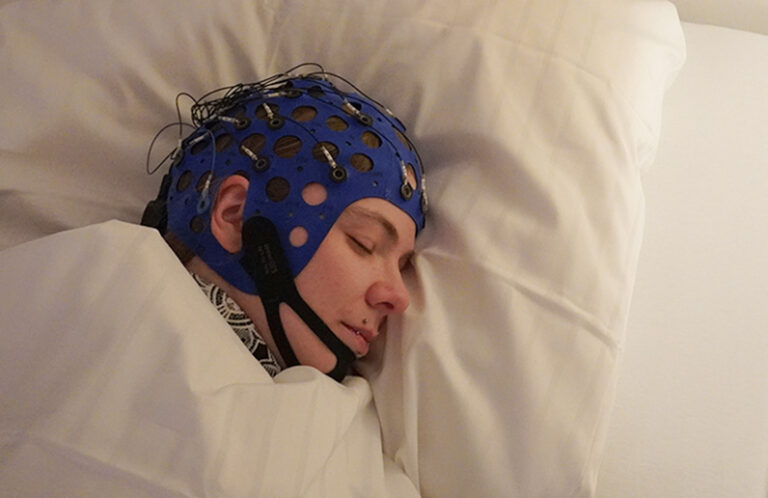
Sleep is fundamental to our well-being, yet understanding its trends can be complex. EEG offers unique insights into brain activity during sleep, helping us uncover factors contributing to restlessness and fatigue. Mobile EEG devices, like Mentalab Explore, are revolutionizing sleep research by enabling comfortable, at-home recordings that capture comprehensive sleep data, rivaling traditional in-lab polysomnography.
Explore five more common questions about EEG, focusing on what brain waves mean. Discover who pioneered EEG, how to identify abnormal patterns, whether past seizures can be detected, and the intriguing connections between EEG patterns, problem-solving, and intelligence.
Electroencephalography (EEG) measures brain activity by detecting electrical currents from neurons on the scalp. This non-invasive technique, pioneered by Hans Berger in 1924, is vital for diagnosing neurological conditions like epilepsy, stroke, and sleep disorders. EEG offers unparalleled temporal resolution, allowing real-time monitoring of brain activity, and can be safely performed by trained professionals in various settings.
Steady-State Visually Evoked Potentials (SSVEPs) are brain signals that synchronize with flickering visual stimuli, making them a popular and reliable tool for Brain-Computer Interfaces (BCIs). By detecting which flickering frequency matches a user's neural activity, SSVEP-based BCIs can enable control over external systems with high accuracy and minimal training. This post delves into SSVEPs, illustrating their application with examples of online and offline classifiers developed using the Mentalab Explore system, freely available for researchers to build upon.