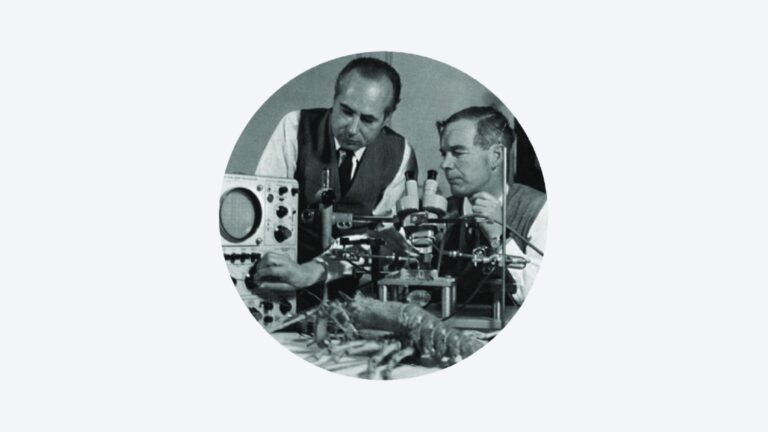
The Most Famous Paper In Neuroscience
What made a 1952 paper so groundbreaking that it won a Nobel Prize? We dive into Hodgkin and Huxley’s iconic model of nerve conduction and its lasting impact on neuroscience.

What made a 1952 paper so groundbreaking that it won a Nobel Prize? We dive into Hodgkin and Huxley’s iconic model of nerve conduction and its lasting impact on neuroscience.

In the competitive world of neuroscience, publication and citation counts are everything. We dive into a study that uncovers the most influential research and topics, offering insights into what truly gets noticed in the field.
Explore five more common questions about EEG, focusing on what brain waves mean. Discover who pioneered EEG, how to identify abnormal patterns, whether past seizures can be detected, and the intriguing connections between EEG patterns, problem-solving, and intelligence.
Electroencephalography (EEG) measures brain activity by detecting electrical currents from neurons on the scalp. This non-invasive technique, pioneered by Hans Berger in 1924, is vital for diagnosing neurological conditions like epilepsy, stroke, and sleep disorders. EEG offers unparalleled temporal resolution, allowing real-time monitoring of brain activity, and can be safely performed by trained professionals in various settings.