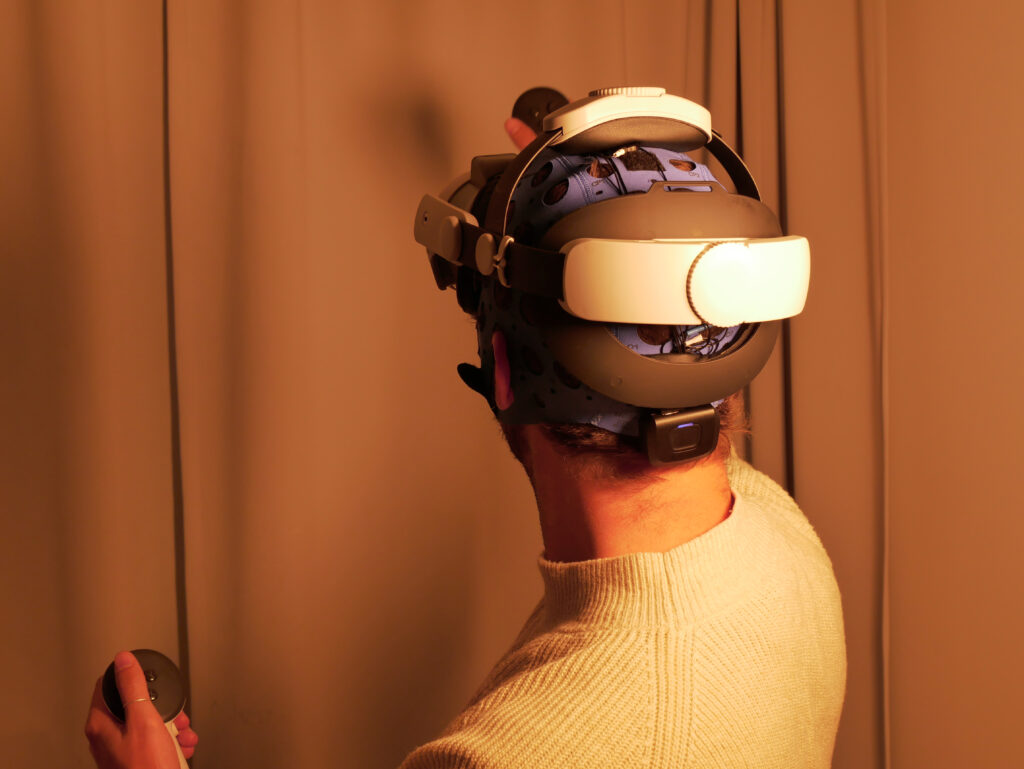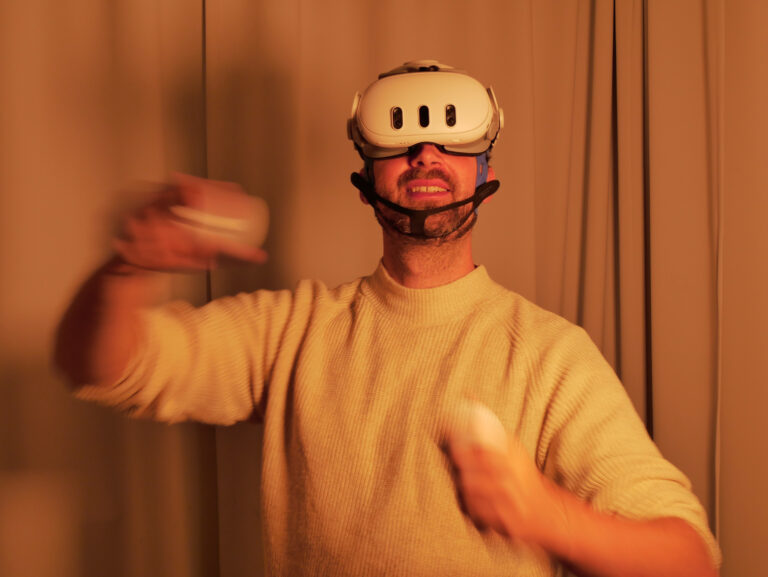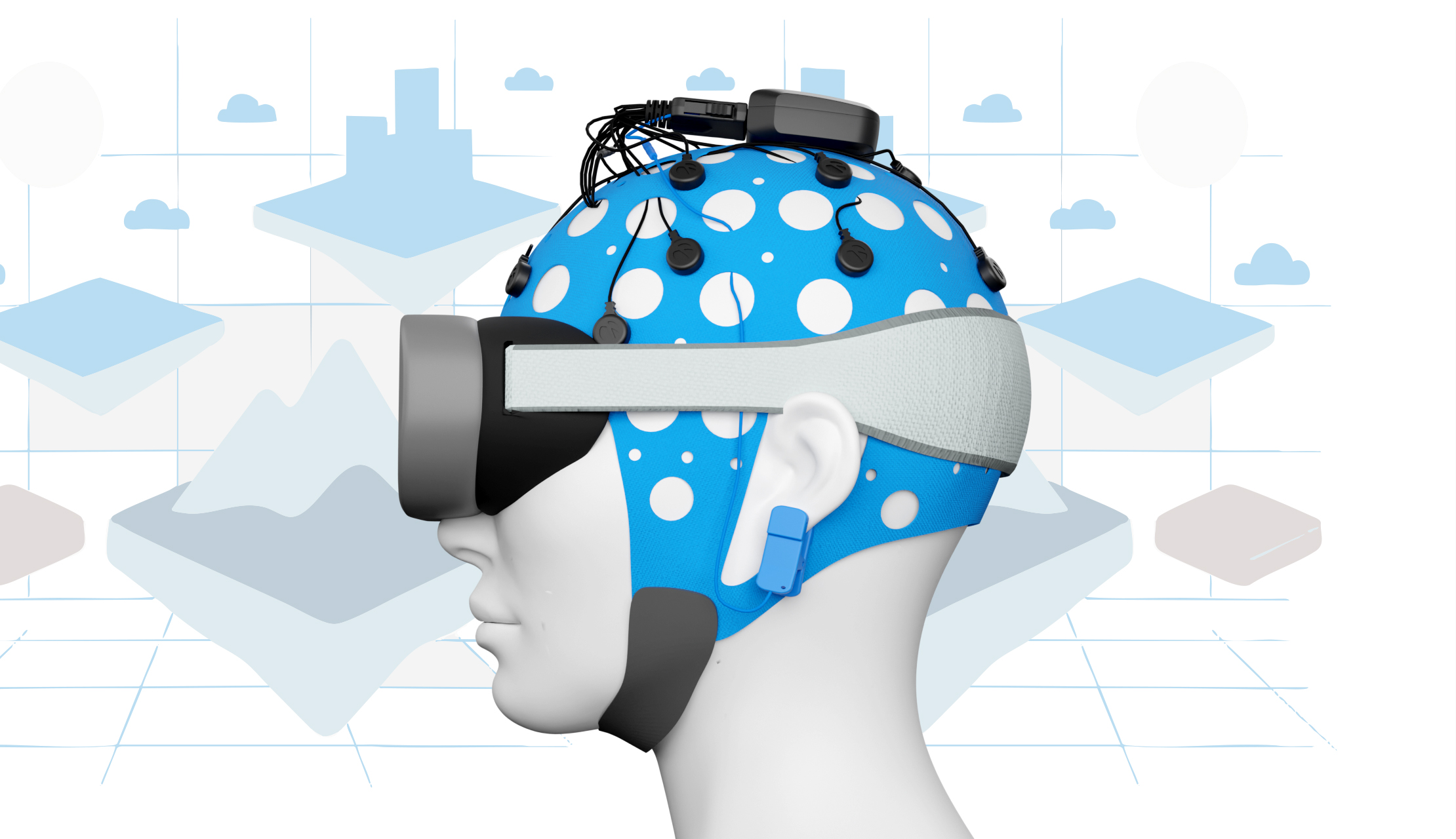

For decades, neuroscience has faced a significant reality gap. Researchers traditionally had to choose between the sterile control of a laboratory and the unpredictable complexity of the real world. This compromise often limited the ecological validity of neuroscientific findings, but a transformative shift is now underway. Extended Reality (XR), encompassing Virtual, Augmented, and Mixed Reality, can break these walls down [1].
Bridging the Gap: Laboratory Precision Meets Real-World Context
This technological shift allows us to simulate complex and naturalistic environments while maintaining millisecond-level control over every experimental variable [2]. By creating a digital twin of reality, we can observe the brain as it functions in contexts that actually matter, such as navigating a busy street, performing surgery, or confronting a phobia, all without ever leaving the safety of the clinic [3].
Beyond merely creating realistic environments, this level of immersion fundamentally changes how the brain interacts with digital space.
The Science of Embodiment and Plasticity
One of the most profound contributions of XR is its ability to manipulate embodiment, which is the neurological sense of owning a body [4]. Through VR, we can induce illusions where the brain accepts a virtual avatar as its own. This is more than a psychological trick; it is a direct application of neuroplasticity. By re-mapping the brain to an external body, we are unlocking new therapeutic frontiers.
In the field of neurorehabilitation, stroke survivors can use brain-computer interfaces (BCIs) to control a healthy virtual limb. This consistent visual feedback encourages the brain to form new neural pathways and accelerates motor recovery [5, 6]. Parallel to physical recovery, XR is also transforming mental health by providing a safe and repeatable setting for exposure therapy. Whether treating PTSD or social anxiety, clinicians can precisely titrate the dose of stress a patient experiences, a method now supported by recent large-scale meta-analyses [7].
However, the subjective experience of immersion is only one side of the coin. To truly understand the patient’s state, we must look deeper into the body’s physiological response.
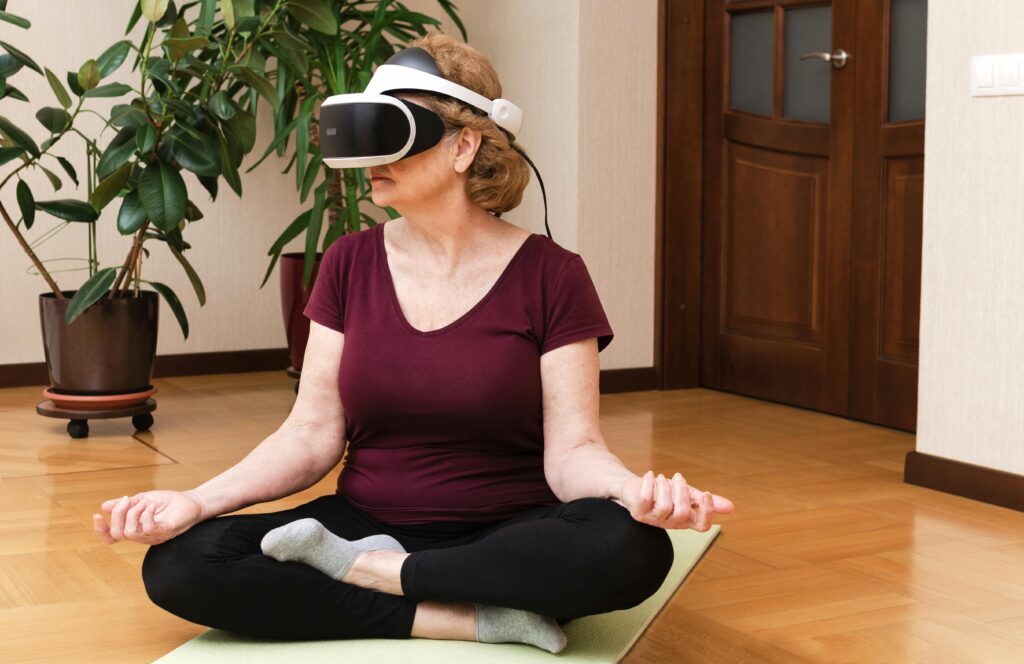
The Objective Edge: Integrating Real-Time Biosignals
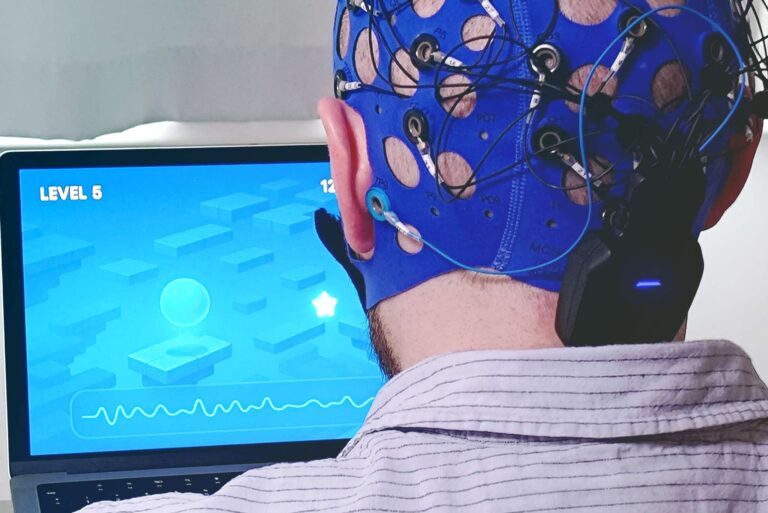
The true potential of XR is realized when it is synchronized with objective biosensors. Relying solely on a patient’s subjective report is often insufficient because internal states can be difficult to verbalize. By integrating EEG (brain activity) and ECG (heart activity) into the headset, we gain a real-time window into the subconscious [8, 9].
This multimodal data allows for two critical breakthroughs:
- Quantifying Cognitive Load: Changes in alpha and theta brain waves can indicate exactly when a trainee is overwhelmed during a simulation, allowing for real-time adjustment of task difficulty [9].
- Physiological Stress Tracking: Heart rate variability (HRV) derived from ECG acts as a precise proxy for emotional arousal and subjective workload, providing data-driven insights for surgical and clinical training [8].
As these measurement tools become more sophisticated, they pave the way for a more responsive and intelligent form of therapy.
The Intersection of Neuro-Analytics and Clinical Ethics
The convergence of XR, biosignals, and AI leads toward the perfection of these tools through what researchers call “Closed-Loop Systems.” In this vision, environments act as a responsive partner in the healing process. Imagine a therapeutic space deeply attuned to the patient: if the system recognizes subtle physiological signs of distress, the virtual world can gently evolve to provide more support, perhaps by softening the landscape to help the patient regain their footing.
However, reaching this technical peak is only half the journey. The true challenge lies in defining the exact, humane application of these systems. As we move toward this personalized future, we must rigorously address the ethical and moral implications of real-time neural monitoring. Only by placing human dignity and clinical ethics at the center of design can we transform technology from a mere tool into a truly empathetic ally in patient-centered care.
References
- Frontiers in Psychiatry. (2025) Zeng, W., Xu, J., Yu, J., & Chu, X. (2025). Effectiveness of virtual reality therapy in the treatment of anxiety disorders in adolescents and adults: a systematic review and meta-analysis of randomized controlled trials. Frontiers in Psychiatry, 16, 1553290.
- CIFAR. (2020). Neuroscience in XR: Driving Immersive Reality. https://cifar.ca/cifarnews/2020/07/02/neuroscience-in-xr-driving-immersive-reality/
- Frontiers in Systems Neuroscience. (2022).Thurley K (2022) Naturalistic neuroscience and virtual reality. Front. Syst. Neurosci. 16:896251. doi: 10.3389/fnsys.2022.896251
- MDPI. (2025). González-Erena, P. V., Fernández-Guinea, S., & Kourtesis, P. (2025). Cognitive assessment and training in extended reality: Multimodal systems, clinical utility, and current challenges. Encyclopedia, 5(1), 8.
- PubMed. (2023). Suzuki, K., Mariola, A., Schwartzman, D. J., & Seth, A. K. (2023). Using extended reality to study the experience of presence. In Virtual Reality in Behavioral Neuroscience: New Insights and Methods (pp. 255-285). Cham: Springer International Publishing..
- ResearchGate. (2023). Multimodal Approach to Assess a Virtual Reality-Based Surgical Training Platform.
- USC Chan Division. Neural Plasticity and Neurorehabilitation Laboratory: Virtual Reality and BCIs. https://chan.usc.edu/npnl/research/virtual-reality-and-bcis
- MDPI. (2025). Reviewing the Horizon: The Future of XR and AI in Neurorehabilitation. APA Style
- Akbar, K., Passaro, A., Di Gioia, M., Martini, E., Dragone, M., Zullo, A., & Stasolla, F. (2024). Reviewing the Horizon: The Future of Extended Reality and Artificial Intelligence in Neurorehabilitation for Brain Injury Recovery. Information, 15(8), 501. https://doi.org/10.3390/info15080501
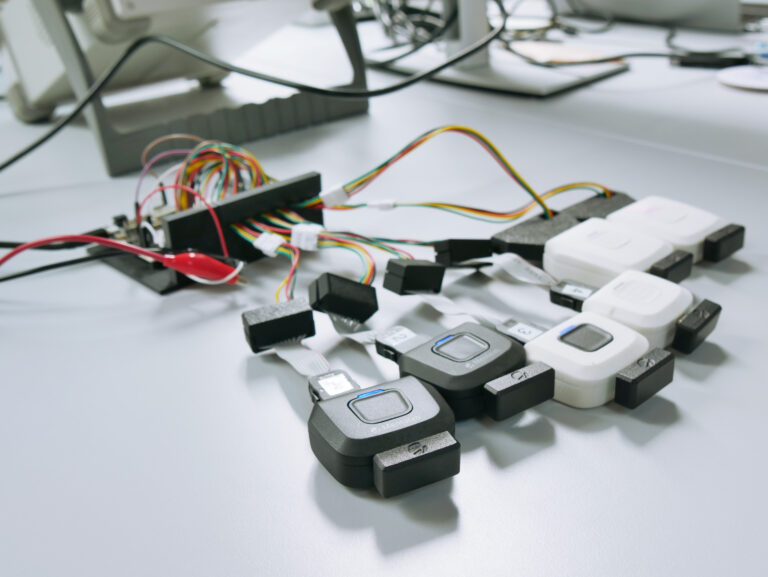
For researchers and developers exploring how EEG can shape immersive VR, AR and XR experiences in real time, the Mentalab Explore Pro system offers a practical and flexible foundation. Explore devices provide high-quality ExG data in a compact wireless form, making it easy to integrate EEG into mobile or headset-based VR setups. Using the open Explore API together with frameworks like Lab Streaming Layer, EEG metrics such as Alpha power can be streamed directly into interactive environments without additional hardware. When combined with Mentalab Hypersync, simultaneous and precisely aligned EEG measurements across multiple devices become possible as well.