
Until recently, most neuroscience research on sport performance took place under highly controlled laboratory conditions. While those studies have advanced our understanding of sports performance (e.g., Park et al., 2015), newer research is increasingly shifting toward studying athletes in the dynamic and often unpredictable conditions of real sport.
What if we could measure the athlete’s brain in motion, on the field, the track, the court, or even in the pool, without sacrificing data quality? Advances in mobile EEG now make this possible, opening the door to truly ecological, real-world sports neuroscience.
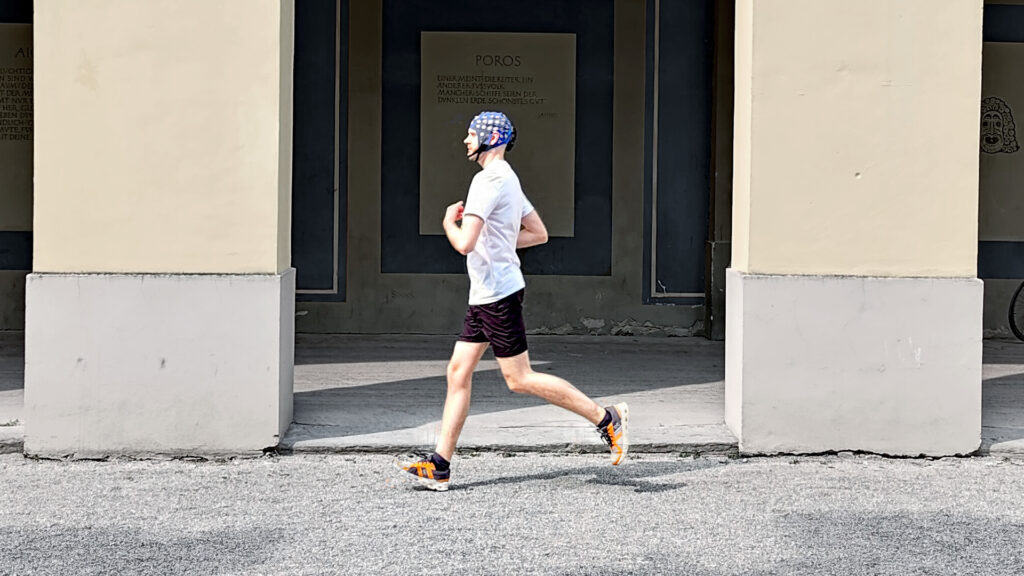
Mobile EEG in Sports Performance
This post explores why mobile EEG matters for sport science, what we can learn when we move beyond the lab.
Despite concerns about movement artifacts, especially in high-acceleration sports, Cheron et al. (2016) highlight promising hardware solutions, including sensor designs that can directly measure and subtract motion noise. As these technologies mature, the feasibility of high-quality EEG in naturalistic settings becomes increasingly well-supported.
This is strongly supported by a recent PhD thesis from Georgia Alexandrou (2021), who recorded mobile EEG from elite athletes during real sporting behaviors such as pistol shooting and curling. Her work identifies distinct neural signatures that separate successful from unsuccessful performance and shows that these patterns vary significantly between athletes and between sports.
In precision tasks like shooting, unsuccessful attempts consistently showed elevated alpha, theta, and beta power in the final second before trigger pull. These patterns are associated with reduced attentional efficiency and increased cognitive effort. By contrast, successful attempts, showed lower activity across these bands, aligning with the “neural efficiency” hypothesis.
Sport-Specific Brain Patterns
In curling, the picture was entirely different: successful shots were marked by increased right-frontal theta activity during preparation, suggesting enhanced cognitive control and strategic focus.
The key insight is clear: there is no single ‘sport brain pattern.’ Optimal neural dynamics are highly individual, shaped by the athlete, the task, and the sport.
This aligns with broader neuroergonomics findings. Rahman et al. (2019) show that EEG can be reliably captured during running, cycling, weightlifting, yoga, and other full-body activities. Across modalities, alpha, theta, and beta power rise with exercise intensity, but near-maximal effort produces sharp drops in alpha, indicating growing cognitive and physiological load. Even gait which was once considered too noisy to measure, reveals distinct gamma-band fluctuations across the stride cycle. This demonstrates that motor coordination carries a rhythmic cortical signature.
Together, these findings show that mobile EEG does not fall apart during movement. Instead, it provides a powerful window into how the brain and body interact in real athletic environments. Mobile EEG is emerging not just as a scientific tool, but as a foundation for individualized neurofeedback, performance optimization, and future applications across rehabilitation, ergonomics, and health monitoring.
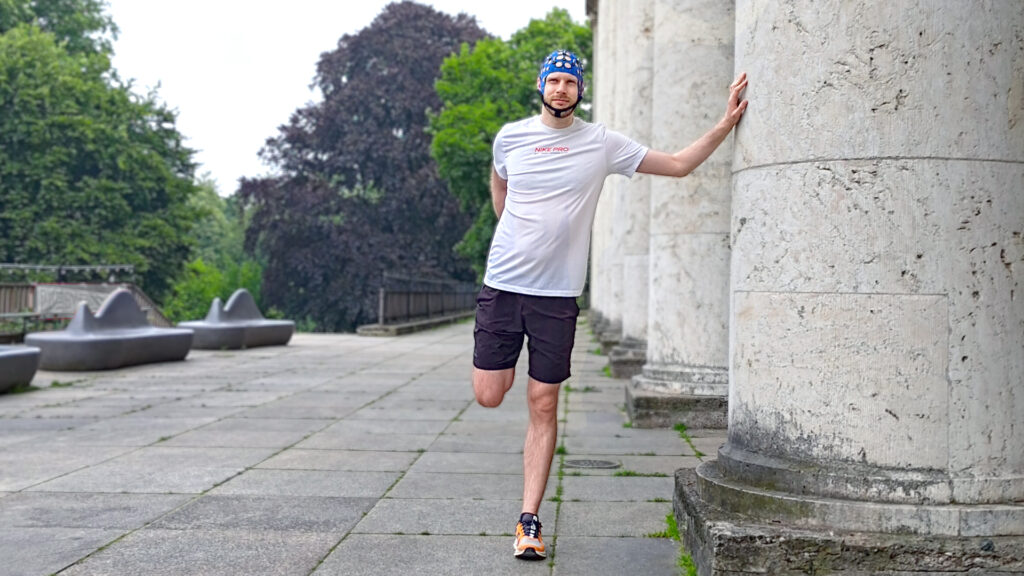
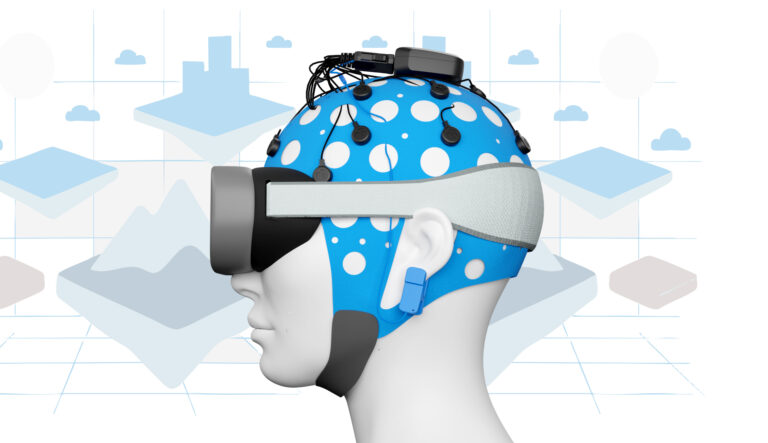
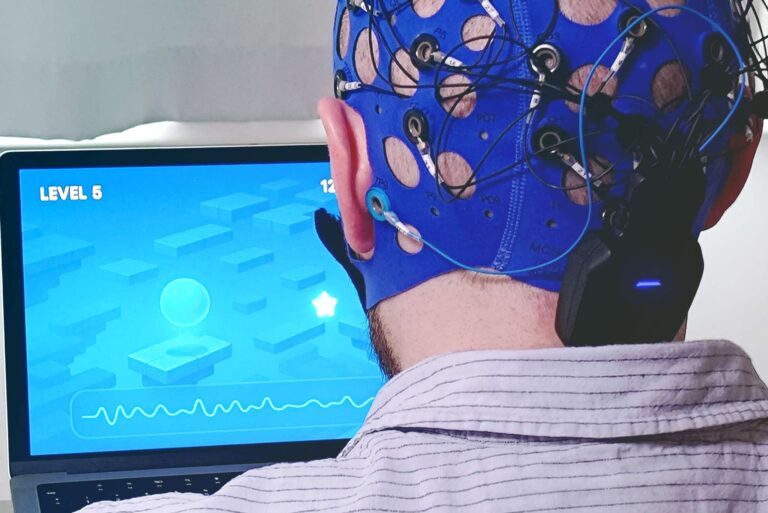
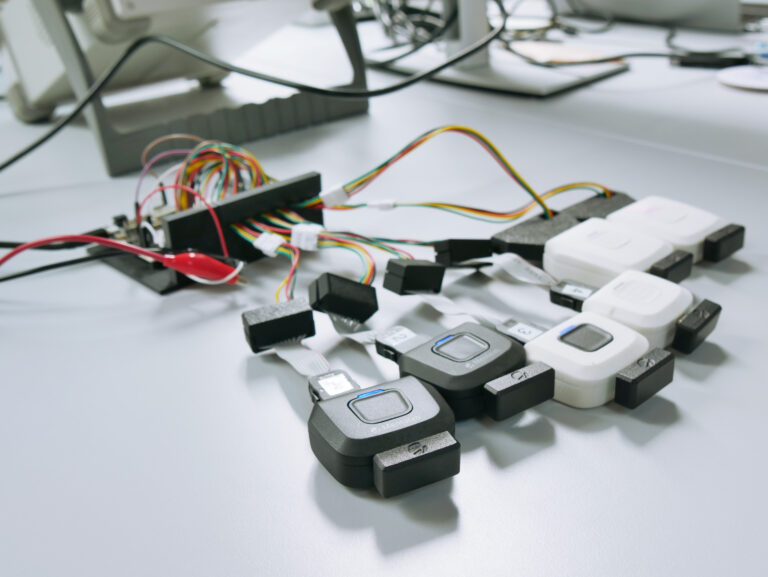
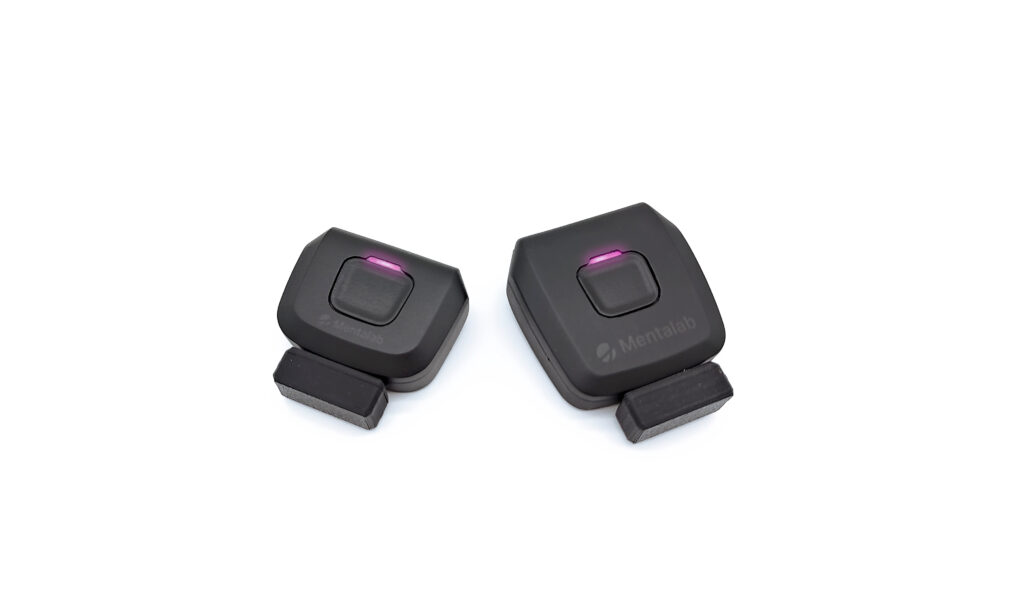
For researchers and developers seeking a flexible ExG biosignal platform, the Mentalab Explore Pro system delivers up to 32 channels of research-grade data in a compact, wireless system. Its mobile app enables real-time data viewing, while an open software API and support for wet and dry electrodes ensure versatile integration. With Mentalab Hypersync, simultaneous inter- and intrapersonal measurements become possible, supporting advanced studies in environments outside the laboratory.
References:
- Alexandrou, G. (2021). Validating the use of mobile EEG to investigate neural markers of real-world successful sporting performance in elite athletes (Doctoral dissertation, University of Stirling). University of Stirling.
- Cheron, G., Petit, G., Cheron, J., Leroy, A., Cebolla, A., Cevallos, C., Petieau, M., Hoellinger, T., Zarka, D., Clarinval, A., & Dan, B. (2016). Brain oscillations in sport: toward EEG Biomarkers of Performance. Frontiers in Psychology, 7, 246. https://doi.org/10.3389/fpsyg.2016.00246
- Park, J. L., Fairweather, M. M., & Donaldson, D. I. (2015). Making the case for mobile cognition: EEG and sports performance. Neuroscience & Biobehavioral Reviews, 52, 117–130. https://doi.org/10.1016/j.neubiorev.2015.02.014
- Rahman, M., Karwowski, W., Fafrowicz, M., & Hancock, P. A. (2019). Neuroergonomics Applications of Electroencephalography in Physical Activities: A Systematic review. Frontiers in Human Neuroscience, 13, 182. https://doi.org/10.3389/fnhum.2019.00182