
Editorial note: This work was led and implemented by Nayan Sharma, one of Mentalab’s Software Engineers.
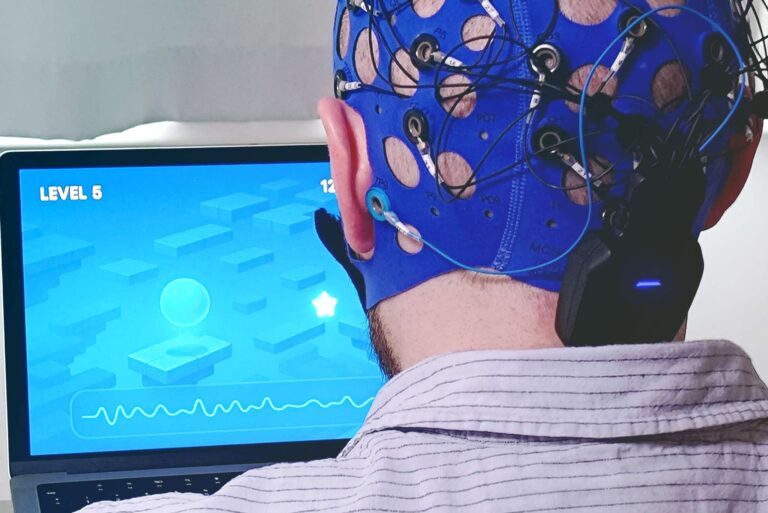
Many researchers working with EEG face a similar challenge. Most feedback tasks rely on simple visual cues on a flat screen that do not reflect real environments or natural movement. At the same time, there is growing interest in studying behaviour in situations that feel more immersive. VR can offer this, but it only becomes meaningful when the virtual environment can react to the user in real time.
How can EEG data change what happens in VR in real time without a complicated setup?
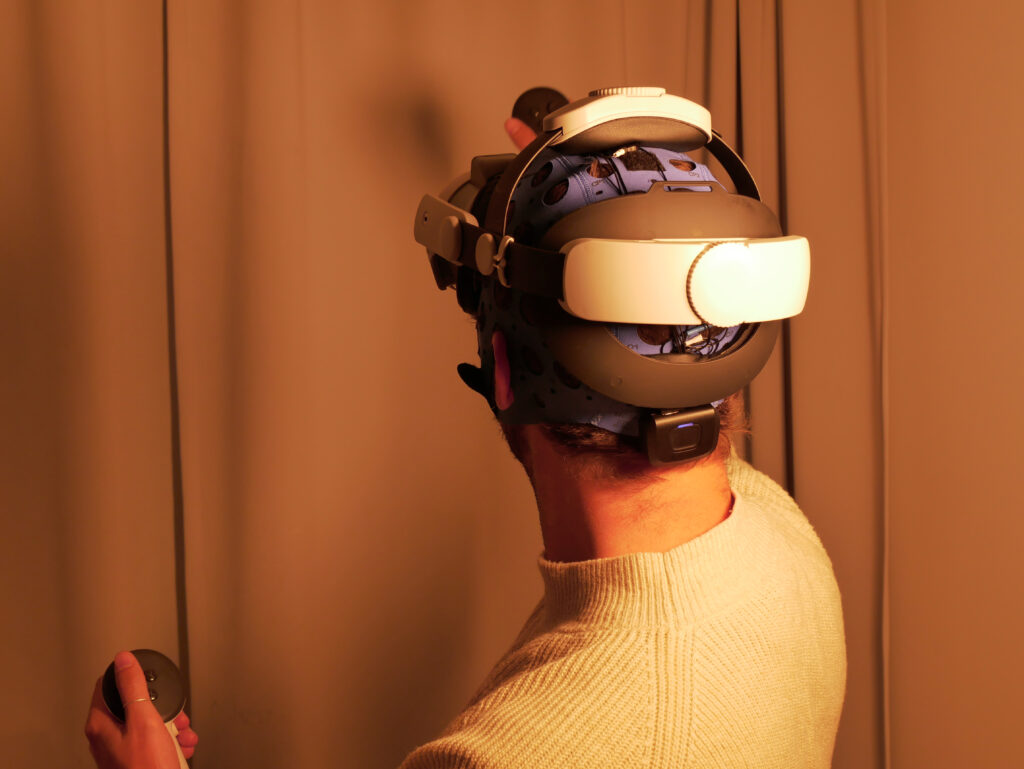
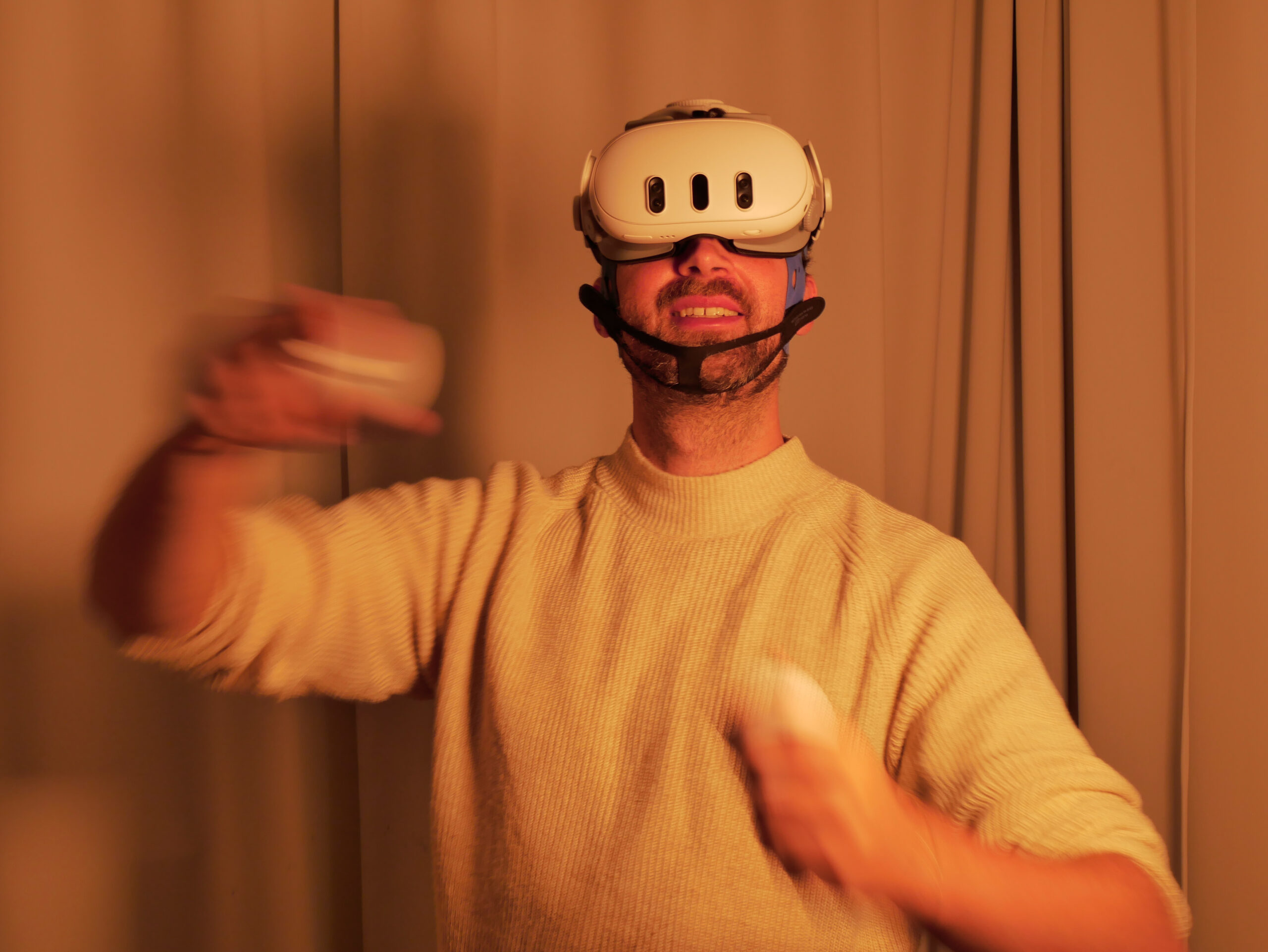
We wanted to explore whether Mentalab Explore devices could support this kind of interaction and whether the experience would feel intuitive. The aim was not to create a full application but to build a working example that shows what is possible when EEG and VR are connected.
The solution we built
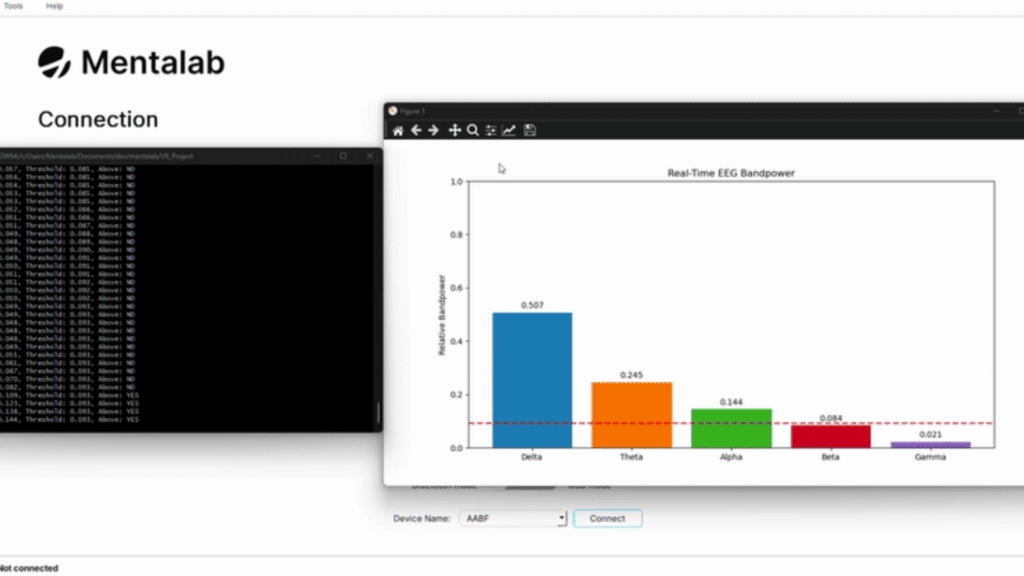
To make this possible, we processed the EEG in Python, calculated the Alpha band power, and streamed the results through Lab Streaming Layer to Unity. Unity then adjusted the scene based on how stable or variable the Alpha signal was. Instead of focusing on the technical mechanics, we focused on the user experience: would the feedback feel understandable and responsive?
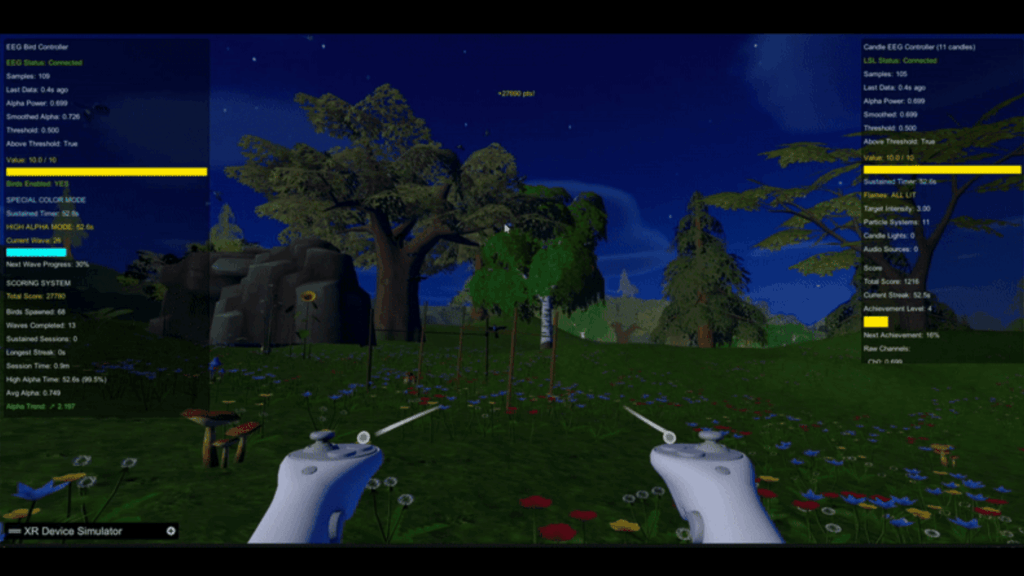
We created a simple virtual space that reacts directly to the user’s Alpha activity. When Alpha rises, the cabin brightens, and certain environmental features, like small birds, begin to appear. When Alpha falls, the scene becomes quieter again. The feedback is meant to feel natural rather than forced.
The result is a small but complete system that illustrates how mental states can be reflected inside a virtual environment. It shows that biofeedback does not have to stay on flat screens. It can be part of an immersive setting where users can explore how their internal state shapes what they see.
What this approach offers
This type of setup can support research on topics such as attention, relaxation training, and interactive tasks in VR. It also gives a basis for experiments where context matters. A quiet forest, a bright room, or a busy environment may influence the user’s mental state, and EEG-driven VR allows these elements to shift in response.
The project does not aim to solve every challenge around VR and EEG. It simply shows a practical path for joining the two. The hope is that it encourages researchers to try their own versions and explore what kinds of questions this combination can help address.
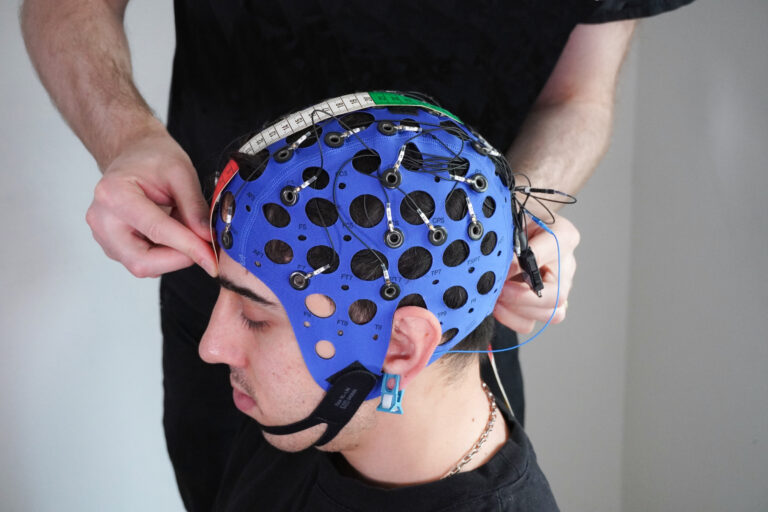
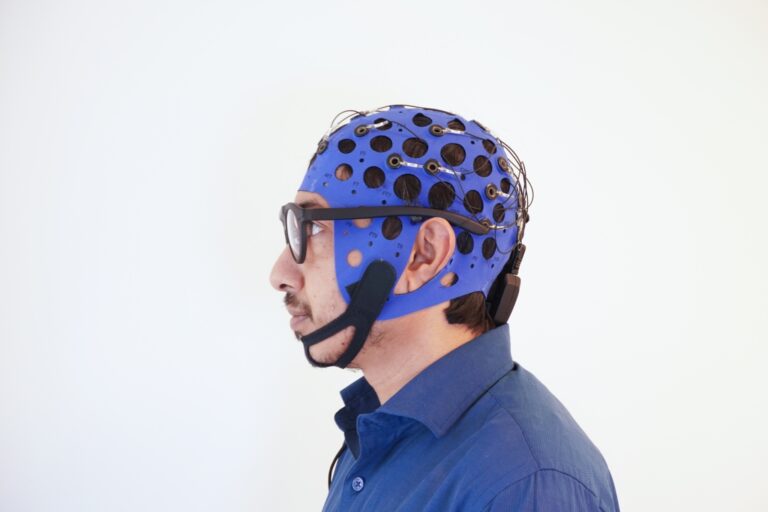
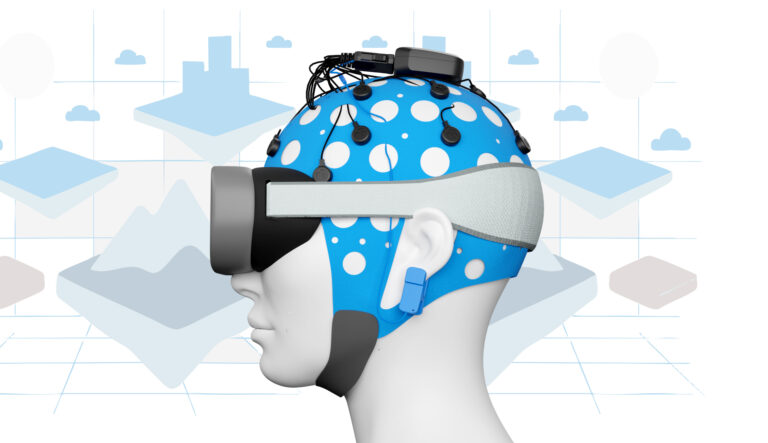
For researchers and developers exploring how EEG can shape immersive VR experiences in real time, the Mentalab Explore Pro system offers a practical and flexible foundation. Explore devices provide high-quality ExG data in a compact wireless form, making it easy to integrate EEG into mobile or headset-based VR setups. Using the open Explore API together with frameworks like Lab Streaming Layer, EEG metrics such as Alpha power can be streamed directly into interactive environments without additional hardware. When combined with Mentalab Hypersync, simultaneous and precisely aligned EEG measurements across multiple devices become possible as well.